
A história das abelhas num mundo cada vez mais quente costuma soar sombria. As manchetes falam em declínio de polinizadores e em temperaturas em alta que colocariam a sobrevivência em risco.
Ainda assim, um estudo recente traz um quadro mais complexo. Algumas mamangavas podem lidar com o aquecimento melhor do que se imaginava.
O que determina o resultado não é apenas a temperatura, e sim fatores como o local onde os ninhos são construídos e a forma como a colónia (colônia) se organiza e funciona.
Uma mudança de perspectiva
Durante anos, a ciência avaliou o impacto do calor olhando para animais isolados. Esse método faz sentido para muitas espécies, mas não descreve bem o que acontece com insetos sociais.
“A lot of research on how higher temperatures affect living things has been done on individual animals,” said Clint Penick, corresponding author of a paper on the work and an assistant professor of insect ecology at Auburn University.
“But when it comes to social animals, such as ants and bumble bees, you have to look at the entire society.”
Funções dentro da colónia de abelhas
Uma colónia de mamangavas opera como um sistema integrado, em que cada grupo assume tarefas específicas. Há indivíduos que procuram alimento, outros que cuidam das larvas e também aqueles que ajudam a manter a temperatura do ninho sob controlo. Quando uma dessas funções falha, o efeito repercute no conjunto.
“For example, individuals within a bee colony have different, specialized roles,” said Penick.
“If any of those roles aren’t fulfilled, it’s difficult or impossible for the colony to thrive. If we’re looking at systemic challenges, such as widespread increases in temperature, that could impact the well-being of species across large geographic areas.”
A colónia de abelhas como uma unidade viva
Observar apenas uma abelha não basta para entender a dinâmica real: a colónia comporta-se como uma unidade viva. Em conjunto, ela redistribui esforço, faz ajustes e enfrenta o stress de forma coordenada.
Com o aumento das temperaturas, isso torna-se decisivo. O calor não atinge cada indivíduo de forma independente; ele altera o ambiente partilhado dentro do ninho.
Os cientistas já tinham evidências de que mamangavas podem sofrer sobreaquecimento durante a procura por alimento. O que faltava compreender era o que acontece no próprio ninho.
A coautora do estudo, Elsa Youngsteadt, é professora associada de ecologia aplicada na North Carolina State University.
“We previously found that individual bumble bees reach stressfully hot body temperatures while foraging on warmer days,” said Youngsteadt.
“ But it’s important to understand how that fits into the big picture for the entire colony. How do higher temperatures affect the nest, where the queen bee lives and where the next generation of bees is developing?”
O ninho é onde está o futuro da colónia. Se esse ambiente se mantiver estável, a colónia pode persistir; se falhar, todo o sistema entra em colapso.
Abelhas regulam a temperatura do ninho
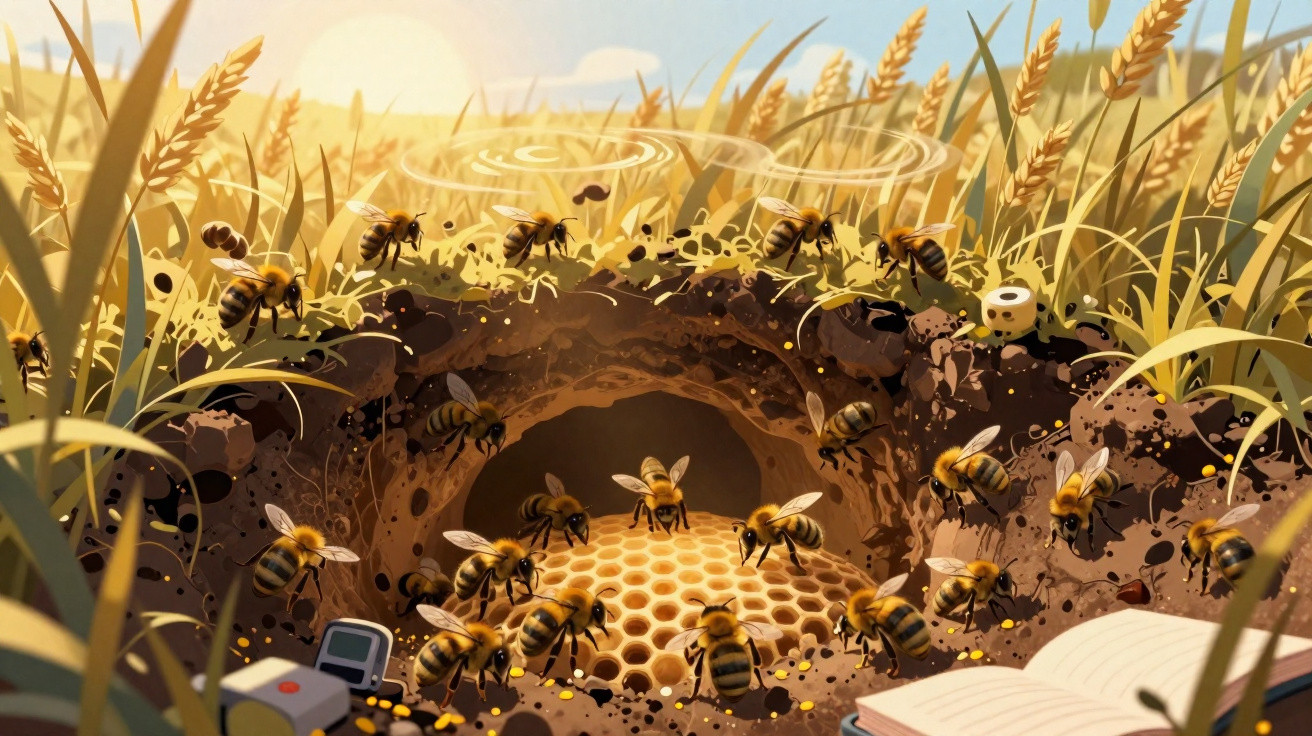
As mamangavas já têm mecanismos para controlar o calor dentro do ninho - sem qualquer equipamento, apenas com comportamento.
“When it’s too warm, bumble bees have a living air-conditioning system, with bees fanning their wings to circulate air through the nest,” noted Penick.
“And when the air is cooler, worker bees ‘incubate’ the brood by vibrating their flight muscles. But there is very little work that has actively monitored bumble bee nest temperatures, so it’s been difficult to know how changes in temperature may affect them.”
Esse “sistema” natural ajuda a manter o ninho numa faixa segura, mas não é ilimitado.
“Given that there are many different bumble bee species, and that they are major pollinators in agricultural and natural systems, this was a question worth exploring,” said Youngsteadt.
Estudando abelhas em diferentes ambientes
Na pesquisa, a equipa analisou Bombus impatiens e comparou ninhos subterrâneos com caixas instaladas acima do solo.
Os investigadores mediram as temperaturas nos ninhos, observaram o comportamento das abelhas sob diferentes condições de calor e acompanharam a polinização em vários locais. Depois, reuniram as evidências para identificar o padrão geral.
“Cucumbers also grow great in pots, so we could use the same seeds and soil across all the sample sites,” said Youngsteadt.
“Presenting the same plants to pollinators across all the study sites helped us make sure that differences in bee visits were really due to the environment at the site – and especially the temperature – not something else about the plants.”
Ninhos subterrâneos mantêm estabilidade
Os resultados surpreenderam os autores. “We know many bumble bee species are not doing well in the wild, and that they have been contracting from the southern end of their range in the U.S.,” said Penick.
“So we were surprised to see that – in many ways – bumble bee colonies should be doing better under increased temperatures.”
“Bees with belowground nests don’t seem to experience any negative effects, because the nests are insulated from higher heat aboveground. And the increase in temperatures means workers can spend less time incubating the brood and more time foraging, which is beneficial.”
O solo funciona como isolante. Ele amortece variações rápidas de temperatura e protege a colónia do calor da superfície. Além disso, com um ambiente mais quente, diminui a necessidade de aquecer a criação, libertando tempo para que as operárias recolham alimento.
Já os ninhos acima do solo exibem outro cenário. Eles são comuns em contextos agrícolas e, sem a proteção do solo, aquecem com maior rapidez.
Quando isso ocorre, a colónia responde deslocando esforço para o arrefecimento: mais indivíduos passam a abanar as asas para ventilar o interior e sobram menos para outras tarefas. A colónia consegue ajustar-se, mas o equilíbrio fica mais sensível.
Calor extremo causa danos duradouros
A média anual de temperatura não explica tudo; os picos de calor são ainda mais determinantes.
“There is an upper limit to how much the bees can do to cool down a nest,” said Youngsteadt.
“In Georgia, where much of this study was done, above-ground nests only experience about 9 hours per year where the nest gets so hot that fanning doesn’t help anymore.”
“But in a warmer climate, that could go up to nearly 200 hours per year. Even though things look better for bumble bees during most hours of the year, just a few damaging hours could really set a colony back, for example if the larvae die or develop abnormally.”
Em outras palavras, episódios curtos de calor extremo podem anular longos períodos de estabilidade. Algumas horas bastam para mudar o destino de toda uma colónia.
Muitas perguntas permanecem
O estudo também aponta o quanto ainda falta esclarecer.
“We know this can happen, but we don’t know how often it happens or how devastating it really is for a colony,” said Youngsteadt.
“We also need to know more about how the quality of pollen and nectar depend on temperature and what that means for bee health. These are questions we still want to explore in the future.”
Os próximos passos terão de ligar a variação de temperatura à qualidade de pólen e néctar e, por fim, aos impactos na saúde e na sobrevivência ao longo do tempo.





Comentários
Ainda não há comentários. Seja o primeiro!
Deixar um comentário